By Santa Cruz Profunda, from Puerto San Julián · Updated 2026-10-19
Caleta Olivia is the first city you reach when you enter Santa Cruz on National Route 3 from Chubut: it sits on the Gulf of San Jorge, about 50 km from the provincial border. According to the 2022 census it has 56,556 residents, making it the second most populous town in the province after Río Gallegos.
It's an oil town, not a postcard destination. But it has a monument that became a symbol of Patagonia's oil history, a sea lion colony a few kilometers away, a long coastal promenade and a port where you can see sea lions. It's also the gateway to the Ruta Azul, the coastal stretch of Route 3 that continues to Puerto Deseado and Puerto San Julián. The general overview is on the Caleta Olivia page.
Where it is and how to get there
Caleta Olivia is in northeastern Santa Cruz, in the Deseado department, on the coast of the Gulf of San Jorge. You get there on paved National Route 3, which links it with Comodoro Rivadavia to the north and the rest of the Santa Cruz coast to the south.
| From / to | Approximate distance |
|---|---|
| Comodoro Rivadavia | 68 km |
| Pico Truncado | 54 km |
| Puerto Deseado | 213 km |
| Perito Moreno | 280 km |
| Puerto San Julián | 345 km |
| Los Antiguos | 354 km |
| Río Gallegos | 705 km |
| El Calafate | 754 km |
Distances come from Interpatagonia's table and are approximate. From Comodoro Rivadavia it's 68 km of pavement on Route 3, hugging the coast between cliffs and beaches.
By bus
The city has a bus terminal served by several long-distance Patagonian bus companies. Companies, schedules and frequencies change often: check at the terminal before you travel.
By air
According to the province, the nearest airport is Comodoro Rivadavia (Chubut), 78 km away. From there you continue by road.
A bit of history
In 1901 Captain Exequiel Guttero arrived on the ship Guardia Nacional to unload telegraph materials and named the cove Olivia. The city takes November 20, 1901 as its founding date, linked to the telegram announcing the opening of the post and telegraph office.
At first it was a port for shipping wool from the area's ranches. Everything changed in 1944, when oil gushed at Cañadón Seco, about 15 km from the coast, at well O-12. YPF built entire neighborhoods, such as Barrio Parque and 26 de Junio, and the population grew from 3,639 in 1960 to more than 13,000 in 1970.
Things to do in Caleta Olivia
The Gorosito, Monument to the Oil Worker
It's the must-have photo: a statue of about 13 meters showing a worker opening a wellhead valve, made under the direction of sculptor Pablo Sánchez. It was unveiled on December 13, 1969 and stands right in the center, in the middle of the boulevard Route 3 forms as it crosses the city. According to the official explanation reported by Página/12, it faces north, toward Buenos Aires, to symbolize what Patagonia gives the rest of the country. Nobody knows for sure where the name “Gorosito” comes from.
Punta Sur sea lion colony
According to the local tourism office, quoted by Vía País in 2020, it's a haul-out site with about a thousand South American sea lions, open year-round. It's about 10 km from the city, has good access roads and you visit on your own. Watch the animals from a distance and don't go down to the beach where they rest.
Coastal promenade and beach
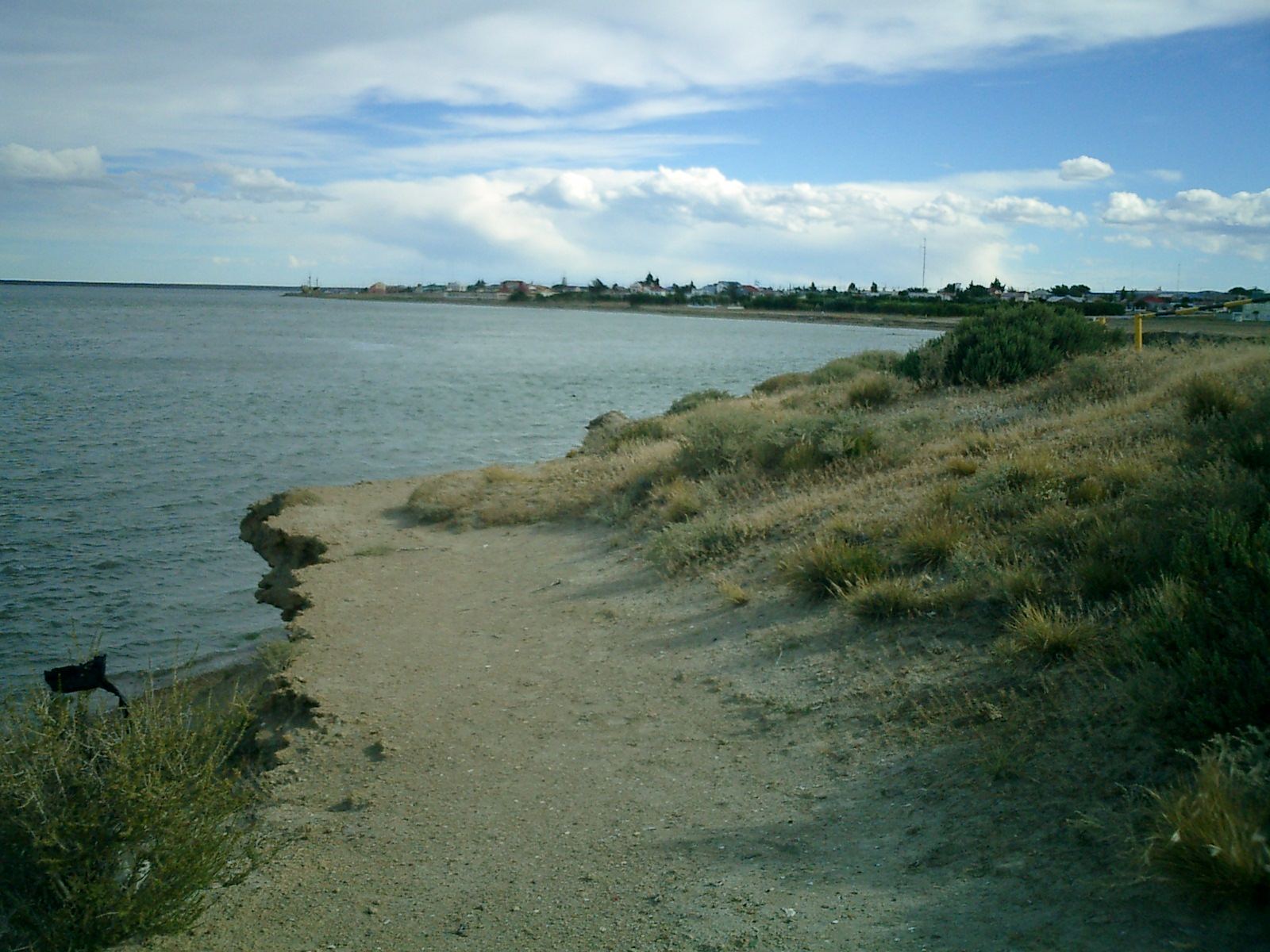
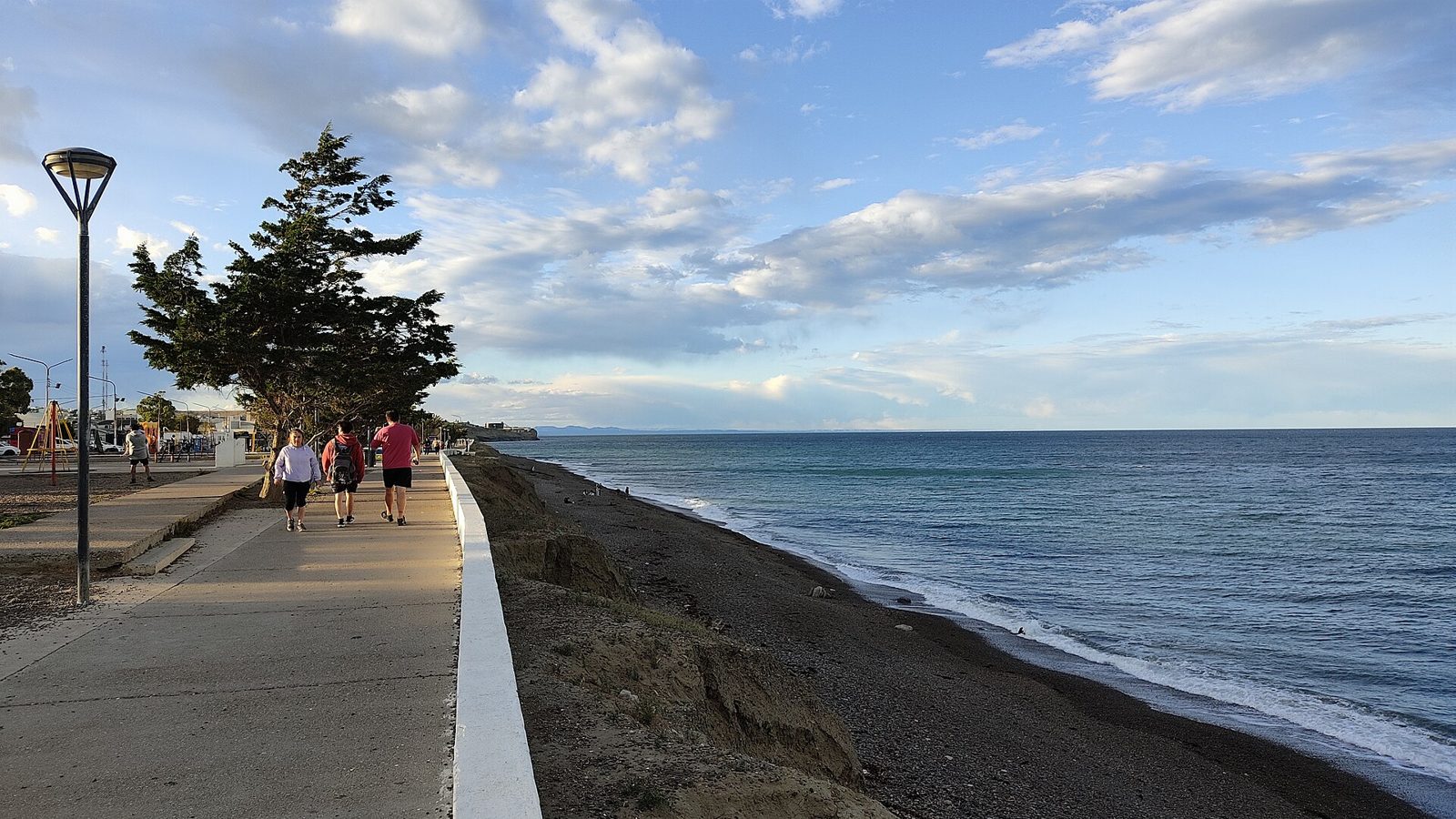
According to the province, the coastal promenade is about 4.5 km long and ideal for a seaside walk; you can also ride it by bike. The municipal beach, between Las Roquitas beach and the Caleta Paula port, is about 4.3 km long, with fine sand and pebbles and a seafront walkway. Other beaches in the area are Playa Bonita, Bajada de la Osa and La Escondida. The water is cold year-round: around 12 °C in summer.
The cove nature reserve and Caleta Paula
The cove that gives the city its name has been a municipal nature reserve since 1992. You'll see gulls and cormorants and, on the rocky shelf at low tide, mussels, snails, starfish and sea urchins. To the south is Caleta Paula, the port opened in 1998, with a viewpoint where you can see South American sea lions. At low tide you can walk along the shore: the tidal range is around 3 meters, so check the tide table before heading out.
Historic and oil heritage circuit
To understand the city, walk through Barrio Parque and the old YPF gamelas (the wooden bunkhouses where single workers lived), the Casa Vieja and the town's first house, from 1903, near the cove's pier. Well O-12, where Santa Cruz's first oil came from, was declared a provincial historic monument.
Whale and dolphin watching from shore
According to records from the Museo Educativo Patagónico cited by Vía País, 21 cetacean species have been identified in the Gulf of San Jorge, including the southern right whale, which passes through on its way to Península Valdés, dolphins, Commerson's dolphins and orcas. That's why the province calls it the “City of Whales”. Sightings aren't guaranteed: bring binoculars and patience. For seasons, check before you travel at Turismo Santa Cruz – Caleta Olivia.
Sport fishing
From shore you can catch silverside and róbalo year-round, and in summer also rays, school sharks, grouper and palometa. La Escondida beach hosts the “6 hours of silverside” fishing tournament. Before you go, check the current fishing rules.
Nearby trips
- Pico Truncado, 54 km away.
- Jaramillo and Fitz Roy, old Patagonian Railway towns, south along Route 3.
- The Jaramillo Petrified Forests: a full-day trip, with a gravel stretch on Provincial Route 49. Check the page before you go.
- Monte Loayza Provincial Natural Park protects seabird colonies south of the gulf, but it was created for scientific use and isn't open to tourism.
When to go
The climate is maritime and dry. The wind blows from the west, averaging about 50 km/h, and is strongest in spring and summer. For the beach, fishing and the promenade, the best time is December to March. If you're interested in local life, the city's anniversary is November 20.
How many days to stay
- Half a day: the Gorosito, the coastal promenade and the Caleta Paula viewpoint, if you're passing through on Route 3.
- A full day: add the Punta Sur sea lion colony, the cove reserve and the historic circuit.
- Two days: add Pico Truncado or a fishing outing, or use it as a base for a trip to Jaramillo.
Travel tips
- Bring a windbreaker and something warm even in summer: afternoons can be cold.
- Wind makes driving harder, especially in tall vehicles or motorhomes. Slow down on exposed stretches.
- Fill up in the city before heading inland or south: there are long stretches without services between towns.
- Keep your distance from sea lions and birds, and don't feed wildlife.
- It's a city with a lot of oil and business traffic: book your accommodation in advance.
Where to sleep and eat: business directory. To continue along the coast, see The coast on Route 3.
Frequently asked questions
What can you do in Caleta Olivia in one day?
Start at the Gorosito, walk the coastal promenade, head to the Punta Sur sea lion colony and finish at the Caleta Paula viewpoint. If you have time left, stroll through Barrio Parque.
How far is Caleta Olivia from Comodoro Rivadavia?
About 68 km of paved road along National Route 3, according to Interpatagonia. Comodoro's airport is 78 km from Caleta Olivia.
Can you see sea lions in Caleta Olivia?
Yes. The Punta Sur colony, about 10 km away, has around a thousand South American sea lions and is open year-round. You can also see them from the Caleta Paula port viewpoint.
Are there whales in Caleta Olivia?
21 cetacean species have been recorded in the Gulf of San Jorge, including the southern right whale, and several can be seen from shore. Sightings aren't guaranteed: check the season with Turismo Santa Cruz.